

31 Mar
Is AI making traditional teaching obsolete?
The Evolving Landscape of Education: Tradition Meets Technology
Remember the comforting scratch of chalk on a blackboard, or the familiar rustle of textbook pages in a quiet classroom? For generations, these traditional teaching methods have been the backbone of education, creating countless lightbulb moments for students worldwide. But here’s something that might surprise you: while 67% of educators still rely primarily on conventional teaching approaches, the education landscape is shifting faster than a cursor on a smart screen.
Yet, contrary to the anxious headlines about AI replacing teachers entirely, we’re discovering something fascinating: technology isn’t making traditional teaching obsolete – it’s transforming it into something even more powerful. The real question isn’t about choosing between AI and traditional methods; it’s about understanding how they can work together to create something extraordinary.
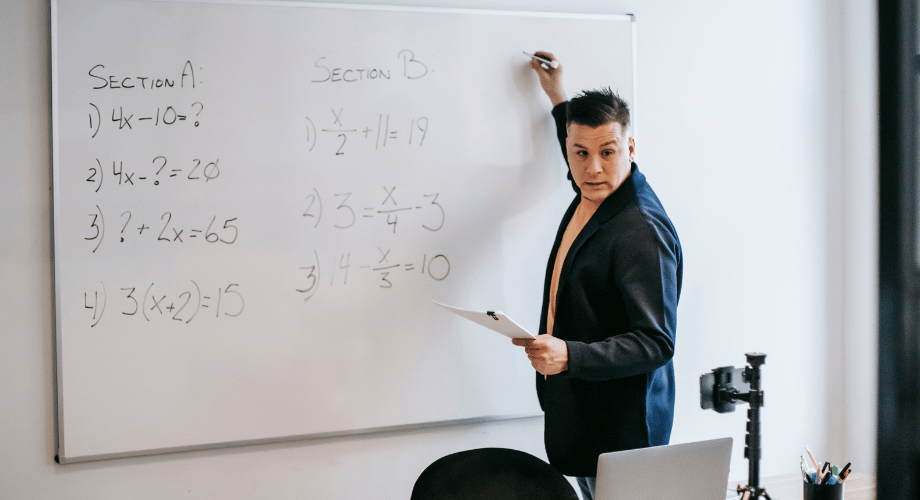
The Perfect Partnership: How AI Enhances Traditional Teaching
1. The Evolution of the Classroom Experience
Traditional teaching methods have always excelled at fostering human connection and emotional intelligence. Today, AI isn’t replacing these fundamental aspects – it’s amplifying them. For instance, while teachers continue their essential role of mentoring and guiding students, AI-powered tools handle time-consuming tasks like marking assignments and tracking attendance. This fusion allows educators to focus more on what they do best: inspiring and connecting with students.
2. Personalisation at Scale
One of the most significant limitations of traditional teaching has been the challenge of personalising education for every student. Here’s where AI creates magic:
- Adaptive Learning Platforms analyse each student’s progress
- Custom-paced lessons that adjust to individual learning speeds
- Real-time feedback that helps students stay on track
- Personalised practice exercises based on individual weaknesses
3. Making Traditional Teaching More Accessible
The marriage of AI and traditional pedagogical approaches has democratised quality education:
- Students in remote areas can access expert teachers through AI-enhanced virtual classrooms
- Learning disabilities are better supported through AI assistive technologies
- Language barriers are broken down with real-time translation tools
- Educational resources are available 24/7 through smart learning platforms
4. Enhanced Assessment and Feedback
Traditional teaching methods have always valued comprehensive assessment, but AI takes this to new levels:
- Instant feedback on assignments
- Detailed analysis of learning patterns
- Early identification of struggling students
- More accurate and objective grading systems
5. The Human Touch 2.0
While educational evolution continues at pace, the core elements of traditional teaching remain irreplaceable:
- Emotional support and motivation
- Critical thinking development
- Social skills and collaboration
- Creative expression and innovation
These fundamentals are now enhanced, not replaced, by AI tools that provide teachers with deeper insights into student progress and needs.
6. Practical Integration Strategies
Modern teaching methods are finding innovative ways to blend AI with traditional approaches:
- Using AI for homework review while maintaining in-class discussions
- Implementing flipped classroom models with AI-supported home learning
- Creating hybrid assessment systems that combine human and AI evaluation
- Developing collaborative projects that use both digital and traditional tools
7. Looking to the Future
The future of education isn’t about choosing between traditional teaching and AI – it’s about their powerful combination. Leading educational institutions are already showing how pedagogical approaches can evolve while maintaining their core values:
- Interactive smart boards that enhance traditional presentation methods
- AI teaching assistants that support, rather than replace, human teachers
- Hybrid learning environments that combine the best of both worlds
- Data-driven insights that inform traditional teaching strategies
Remember that successful teaching has always been about adaptation and growth. Today’s educational evolution simply provides more tools for this ongoing journey, making traditional teaching more effective and accessible than ever before.
For further reading on this topic, explore these valuable resources:
- The Future of Education: AI and Traditional Teaching Methods Working Together
- How Technology is Enhancing Classical Pedagogy
- Success Stories: Schools Embracing AI While Maintaining Traditional Values]
AI helps make teaching better, not take it away. When we bring together the care of a good teacher and the smart tools of AI, learning becomes more personal, teachers get more support, and every student has a better chance to succeed. Picture a classroom where a teacher’s voice fills the room while a smart board helps explain ideas in new ways. This is the future of learning—one that values the past but welcomes new ideas. Whether you teach, learn, or simply love knowledge, you are part of this change. Want to see how AI can help? Visit Easy2Learn.co.za to explore how learning can be smarter and more exciting for everyone.